Florida’s heat has always been part of daily life, but in recent years it’s stopped being just an inconvenience and started becoming a genuine public safety crisis. Summers now regularly push heat index readings past 105°F for weeks at a time, and the consequences are showing up in emergency rooms, workers’ compensation claims, and, increasingly, wrongful death lawsuits. For people who work outdoors or simply walk to class, to work, or across a parking lot in the midday sun, heat has become one of the state’s most underestimated hazards.
When the Workplace Becomes a Heat Trap
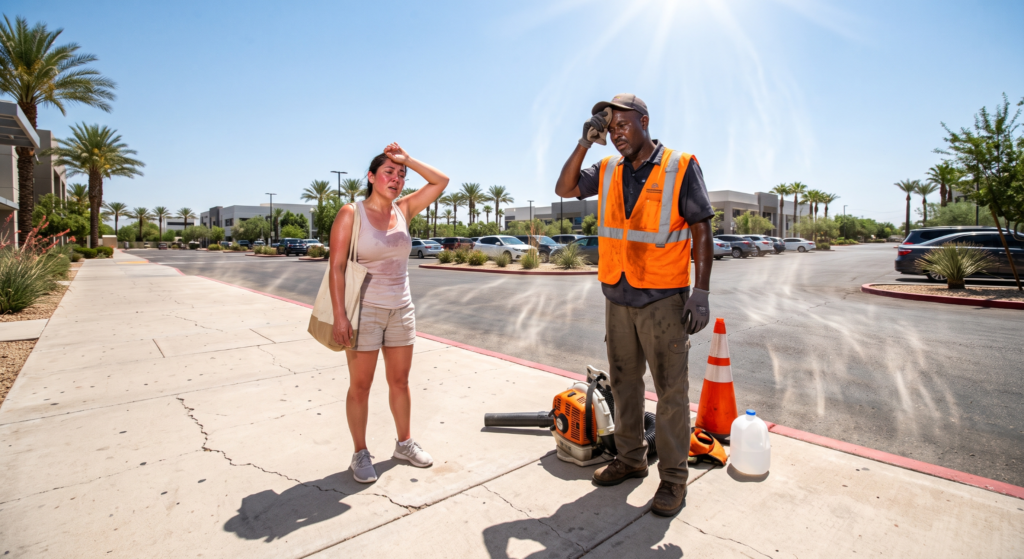
Construction crews, landscapers, agricultural workers, and delivery drivers have long understood the risks of working in Florida’s climate. But the population exposed to dangerous heat is broader than most people assume. University and college campuses employ large outdoor workforces: grounds crews, facilities staff, campus security, and student workers who staff orientation tents, athletic events, and move-in weekends, often during the hottest months of the year, when new-student orientations and summer sessions are in full swing.
Heat-related illness doesn’t require extreme temperatures to become dangerous. According to the Centers for Disease Control and Prevention, heat stress can begin affecting the body once combined heat and humidity push the heat index above 90°F, a threshold Tampa Bay crosses on a near-daily basis for much of the year. Left unaddressed, heat exhaustion progresses quickly to heat stroke, a medical emergency that can cause organ failure or death within minutes.
Sidewalks and Parking Lots Are Hazards Too
Extreme heat isn’t confined to job sites. Pedestrians, students walking between buildings, commuters parked in unshaded lots, and tourists exploring downtown Tampa face the same physiological risks without the protections, like breaks, hydration stations, or shaded rest areas, that responsible employers are expected to provide. Asphalt and concrete radiate stored heat well after air temperatures peak, meaning surface temperatures on sidewalks and crosswalks can run 40 to 60 degrees hotter than the surrounding air. That combination has made heat exposure a factor in pedestrian collapses, dehydration-related falls, and delayed medical responses, particularly in areas with long unshaded walking distances between transit stops and buildings.
The National Weather Service tracks these risks closely because heat remains one of the leading causes of weather-related deaths in the United States, often surpassing hurricanes, tornadoes, and flooding in annual fatality counts. Florida’s combination of high humidity and near-constant sun exposure puts it consistently among the highest-risk states in the country.
A Regulatory Gap Employers Are Exploiting
Despite the clear danger, Florida does not currently mandate statewide heat-safety protections for outdoor workers, with no required water breaks, shade access, or acclimatization periods written into state law. At the federal level, the Occupational Safety and Health Administration has proposed a national heat injury and illness prevention standard, but it has not yet been finalized, leaving enforcement dependent on OSHA’s general duty clause rather than specific, actionable requirements. For employers, that regulatory gray area can translate into cut corners: fewer breaks, less monitoring, and inadequate emergency response planning, especially on time-pressured projects like campus construction or landscaping contracts scheduled around the academic calendar.
When Negligence Turns Heat Into a Legal Matter
When an employer or property owner knew about a heat hazard and failed to act, skipping mandated breaks, ignoring heat advisories, failing to provide water or shade, or disregarding an employee’s visible symptoms, the resulting illness, injury, or death can move beyond a workers’ compensation claim into a negligence case. Property owners who fail to maintain safe walking conditions, post adequate signage near unshaded high-heat zones, or respond appropriately to a pedestrian in medical distress can likewise be held liable.
These cases are rarely straightforward. They require documenting heat index data at the time of the incident, employer or property safety policies, medical records connecting the exposure to the resulting harm, and, in workplace cases, an analysis of whether the injury falls under workers’ compensation exclusivity or supports a separate liability claim. Anyone in the Tampa area affected by a heat-related workplace injury, or a family that has lost a loved one to heat stroke on the job, should talk to experienced attorneys who handle injury‑related claims who can evaluate the circumstances, secure the relevant records before they disappear, and determine what legal options are actually available.
Reducing the Risk Before It Becomes a Case
Institutions with large outdoor workforces and pedestrian populations, including university campuses, can meaningfully reduce heat-related harm without waiting for regulation to catch up. That means scheduling outdoor work and events outside peak-heat windows, installing accessible hydration stations along common walking routes, training staff and student workers to recognize early heat-illness symptoms, and building a buddy system for anyone working alone outdoors. None of these measures are expensive, and all of them are far cheaper than the human and legal cost of a heat-related tragedy.
Florida’s heat isn’t going away, and each summer is trending hotter than the last. The organizations that adapt now, treating heat as a serious safety hazard rather than a seasonal inconvenience, will be the ones that keep their people safe and stay out of a courtroom.